



Moving to Catalonia: Traditions, Customs, and Secrets of Local Etiquette
Catalonia is a region renowned for its rich culture. Although geographically very close to France, it has its own distinct customs and traditions. Our agency, N1immo, explains how to better understand this region to ensure the success of your life plans or investment.
[INSERT PHOTO HERE: A bustling alleyway in a village on the Costa Brava, with locals chatting on a sunny terrace]
Catalan Traditions: The Pride of a Living Culture
Catalans, in general, are very fond of festivals and various celebrations. Here, the calendar is punctuated by events that bring people of all ages together in the heart of towns and villages.
The Sanch Procession
The best known of these is undoubtedly the Sanch procession. It is a highly solemn religious festival that takes place on Good Friday. It reenacts the Passion of Christ through a silent and impressive procession.
Participants wear long traditional robes and pointed hoods (caperutxes). Originally, this long procession served to escort those condemned to death to their execution while protecting their anonymity. Today, this historic commemoration remains a highlight, revered and deeply rooted in the local identity.
The Spectacular Art of the Castellers
Catalonia is proud of its traditions. One of them holds great significance for Catalans: the building of human towers. Those who practice this spectacular discipline are commonly known as “castellers.”
During village festivals (Fiestas Mayores), these teams, dressed in colorful shirts and black sashes, gather in public squares. The groups first form a solid base on the ground (the pinya). Then, the members climb onto each other’s shoulders.
-
They manage to climb several meters high while maintaining their balance.
-
The top of the pyramid is always crowned by a young child (the anxaneta) who raises an arm to certify the structure.
-
This practice requires absolute teamwork, courage, and exemplary solidarity.
[INSERT PHOTO HERE: An impressive human tower (castell) standing in the middle of a crowded Catalan public square]
Etiquette and Daily Customs
To truly feel at home in Catalonia, you’ll need to adjust your schedule and habits to the local pace of life. Days are structured differently than in France.
The Sacred Ritual of Walking
A very important tradition in Catalonia is the evening stroll, known locally as the Paseo or Pas de passeig. From around 7:00 p.m. to 9:00 p.m., just before dinner, Catalans typically take a walk in town, along the coast, or in the mountains.
These strolls are usually taken with friends or family. Shops stay open late, outdoor seating areas fill up, and the streets come alive. In short, it’s a very social and important time for the local community. It’s an opportunity to greet neighbors, chat about the day, and enjoy the mild Mediterranean climate before sitting down to dinner, often around 10 p.m.
Parking and Driving Rules
Cars are a topic that often sparks debate among newcomers to France. Traffic rules and signs are followed much less strictly in Catalonia than in France.
You’ll quickly find that patience is key on the road. Drivers often park improperly, leaving their vehicles in double or triple rows with their hazard lights on just to pick up some bread or drop off a child. So be careful when driving in the urban centers of the Costa Brava. Be prepared for cars in front of you to stop suddenly.
The custom of tipping in restaurants
Paying the bill at a restaurant can also come as a surprise to expats. Tipping is much more common than in France, and waiters often expect a tip from you, even though service is included in the bill.
In France, leaving a tip has become rare. In Catalonia, it is customary to leave a cash tip on the table if the meal and service were excellent. The waitstaff greatly appreciate this gesture of respect for their work.
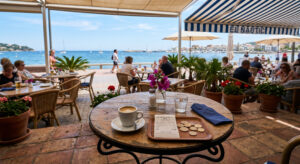
Why moving to Catalonia is a great idea
Living at the heart of this culture offers tangible benefits for your daily life. Its proximity to France makes it easy to travel back and forth while still offering a complete change of scenery.
-
An ideal climate: Over 300 days of sunshine a year, perfect for enjoying outdoor activities.
-
Affordable real estate: Attractive prices per square meter compared to the French coast, with superior amenities (pool, terrace, ocean view).
-
A well-established French-speaking community: There are many French associations here to help you make connections as soon as you arrive.
If you’re looking to settle down, you can browse our complete catalog on our page dedicated to exclusive villas on the Costa Brava. For those with more specific budgets, check out our selection of luxury apartments as well.
Bring your real estate project to life with experts
Understanding a region’s traditions is the first step toward feeling at home there. For the second step—ensuring your property purchase is legally sound—professional guidance is essential. Spanish real estate law has its own set of rules, particularly regarding the verification of property charges and obtaining a NIE.
Are you thinking of moving to Catalonia? Contact our real estate agents! The bilingual team at N1immo.com will guide you through every step of the process, from finding your dream home to signing the papers at the notary’s office. Call us today to make your dream of living under the Catalan sun a reality.
